

 Türkçe
 Deutsch

Toilet Training in Children: Signs of Readiness and Practical Tips for Parents
When Is a Child Ready for Toilet Training?
Most children become ready for toilet training between 18 and 36 months, but there is no exact age that applies to every child. Rather than focusing on age alone, parents should pay attention to developmental signs that indicate their child is physically and emotionally prepared.
Beginning toilet training before these signs appear may create unnecessary stress and prolong the learning process.
Signs of Physical Readiness
Several physical abilities suggest that a child may be ready to begin toilet training.
These include being able to walk independently, sit steadily on a potty, stay dry for at least two hours during the day, pull pants up and down without assistance, and show discomfort when their diaper is wet or soiled. Some children may also wake up with a dry diaper in the morning, indicating increasing bladder control.
Signs of Cognitive and Emotional Readiness
In addition to physical development, children need certain communication and cognitive skills.
A child should be able to understand and follow simple instructions, communicate basic needs, and recognize or express when they need to urinate or have a bowel movement. If a child is not yet able to communicate these needs in some way, it may be beneficial to wait before beginning toilet training.
How Should Toilet Training Begin?
Choosing the right time is important. Major life changes such as moving to a new home, the arrival of a sibling, family conflict, or parental separation can make toilet training more difficult. Whenever possible, training should begin during a stable period.
Before introducing the potty, children benefit from learning simple concepts such as "pee," "poop," "wet," and "dry." Allowing the child to help choose their potty can increase motivation and participation.
The potty should be kept in the bathroom rather than moved around the house. Sitting with both feet firmly on the floor helps children feel secure and maintain balance.
If a child appears afraid of the potty, there is no need to force the process. Allowing them to sit on it fully clothed for several days can help them become familiar with it before beginning actual toilet training.
Making Learning Easier Through Play
Children often learn best through play and observation.
Storybooks about toilet training can help children understand what to expect while making the process less intimidating. Reading about characters who successfully use the toilet allows children to relate to the experience in a safe and engaging way.
Pretend play can also support learning. Dolls, toy potties, and symbolic games encourage children to explore the concept naturally. Parents can participate in these games while allowing the child to guide the play whenever possible.
Encouragement Instead of Pressure
Positive reinforcement can help children develop confidence during toilet training.
Small rewards, such as stickers or verbal praise, may encourage desired behaviors like staying dry or using the potty successfully. However, toilet use should not become the focus of large celebrations or excessive rewards, as this may create unnecessary pressure.
The goal is for toileting to become a normal daily habit rather than a performance that must be rewarded.
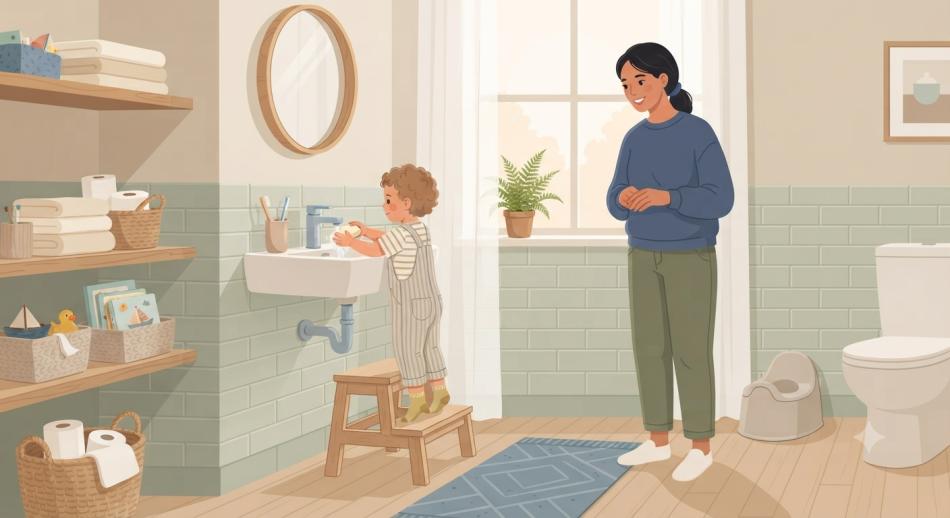
Establishing healthy routines, such as washing hands after every toilet visit, also supports long-term independence.
Children with regular meal schedules often develop predictable bowel habits, making it easier to establish consistent toilet routines.
Nighttime Toilet Training
Nighttime bladder control usually develops after daytime toilet training has been established.
Many children naturally begin staying dry at night once they are consistently dry during the day. Parents can support this process by limiting excessive fluid intake before bedtime and encouraging the child to use the toilet immediately before going to sleep.
Nighttime accidents remain common during this stage of development and should be viewed as a normal part of learning.
If bedwetting occurs, children should never be punished, shamed, or criticized. Instead, parents can calmly involve the child in simple age-appropriate tasks, such as helping change the bedsheets, to encourage responsibility without creating feelings of guilt.
Patience Is Essential
Every child develops at a different pace.
Some children learn toilet skills quickly, while others need more time and practice. Comparing children with siblings or peers can create unnecessary pressure and reduce confidence.
A calm, supportive, and patient approach helps children feel safe throughout the learning process. Accidents should be seen as part of normal development rather than signs of failure.
Conclusion
Toilet training is not simply about learning a new skill—it is an important step toward independence. Beginning the process when a child is developmentally ready and providing consistent support can make the experience more positive for both children and parents.
With patience, realistic expectations, and gentle encouragement, most children successfully develop independent toileting skills in their own time.