

 Türkçe
 Deutsch

Autism and Special Education Support: How Is the Educational Process Planned for Children with Autism?
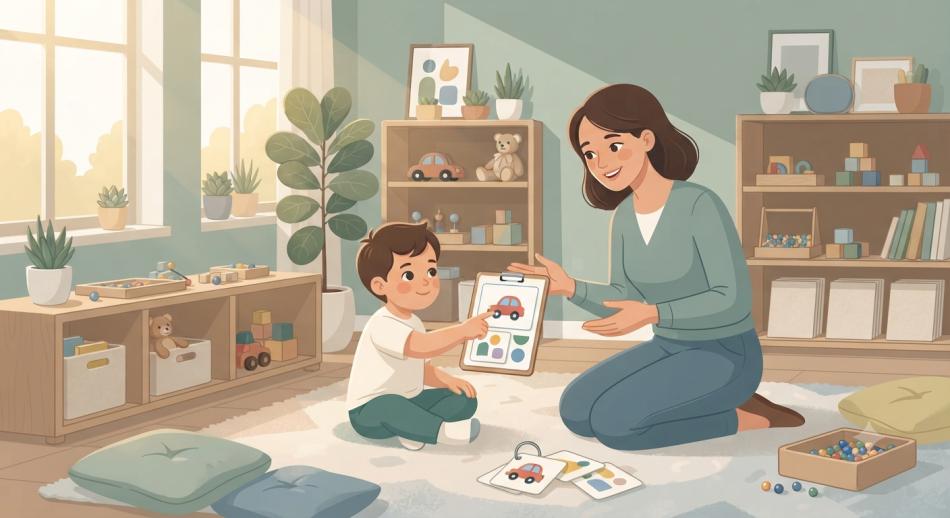
What Is Special Education Support for Children with Autism?
Special education support is an individualized educational process designed according to each child's developmental profile, learning style, strengths, and specific needs.
The primary goal is not simply to teach academic knowledge but to help children communicate effectively, build meaningful relationships, develop independence, and participate more actively in everyday life.
Before beginning intervention, professionals evaluate the child's current developmental abilities and establish realistic, measurable goals. These goals differ from one child to another depending on age, developmental level, communication skills, and functional needs.
For some children, priorities may include eye contact, joint attention, imitation, and early communication skills. For others, instruction following, play skills, self-care, social interaction, or school readiness may become the primary focus.
Why Should Education Be Individualized?
Although children with Autism Spectrum Disorder share the same diagnosis, their developmental characteristics can differ significantly.
Some children communicate verbally, while others rely on alternative communication methods. Some may struggle primarily with sensory processing, while others experience greater challenges in social interaction, behavior regulation, or daily living skills.
For this reason, educational planning should always be individualized.
An individualized educational program considers:
- Communication abilities
- Receptive and expressive language skills
- Social interaction skills
- Play development
- Attention and learning readiness
- Sensory sensitivities
- Behavioral needs
- Self-care and daily living skills
- Family priorities and school environment
Based on this comprehensive evaluation, individualized goals are developed to improve meaningful participation in everyday life.
Which Skills Does Special Education Support?
Special education addresses multiple developmental areas rather than focusing solely on academic achievement.
Communication Skills
Communication abilities vary greatly among children with autism.
Some children may not use spoken language, while others have limited vocabulary or experience difficulty maintaining reciprocal conversations despite having age-appropriate speech.
Educational programs may focus on helping children:
- Express their needs and preferences
- Understand verbal instructions
- Initiate communication
- Take turns during conversations
- Use gestures and facial expressions
- Benefit from Augmentative and Alternative Communication (AAC) systems when appropriate
Social Interaction Skills
Social communication is often one of the primary areas requiring support.
Educational goals may include developing:
- Joint attention
- Turn-taking
- Sharing
- Cooperative play
- Understanding social cues
- Building and maintaining relationships
These skills should be practiced not only during therapy sessions but also at home, in school, and throughout everyday activities.
Play Skills
Play is an essential part of children's cognitive, language, and social development.
Children with autism may display repetitive or restricted play behaviors. Special education programs often encourage:
- Symbolic play
- Functional play
- Imitation
- Interactive play with peers
- Cooperative games
Developing play skills supports communication, creativity, and social learning.
Self-Care and Daily Living Skills
Increasing independence is an important objective of special education.
Intervention may include teaching skills such as:
- Toilet training
- Eating independently
- Dressing
- Hand washing
- Tooth brushing
- Organizing personal belongings
- Completing simple household responsibilities
These functional abilities contribute significantly to children's independence and quality of life.
Behavioral Regulation
Some children with autism experience emotional outbursts, difficulty with transitions, repetitive behaviors, anxiety, or sensory-related challenges.
Rather than viewing these behaviors simply as "problem behaviors," professionals aim to understand their underlying purpose.
Questions commonly explored include:
- Is the child trying to communicate a need?
- Is sensory overload contributing to the behavior?
- Is the child struggling with unexpected changes?
- Is frustration caused by communication difficulties?
Understanding the function of behavior helps professionals develop effective, supportive intervention strategies.
Why Is Family Education Important?
Special education extends far beyond individual therapy sessions.
Parents and caregivers play a central role in helping children apply newly learned skills within everyday routines.
Families may receive guidance on:
- Supporting communication at home
- Responding to challenging behaviors
- Establishing predictable daily routines
- Encouraging independence
- Promoting social interaction during everyday activities
When families actively participate in the educational process, children are more likely to generalize newly acquired skills across different environments.
Educational Approaches Used in Autism Intervention
Various evidence-informed educational approaches may be used in autism intervention. No single method is appropriate for every child, making individualized planning essential.
Common approaches include:
- Behavioral intervention approaches
- Naturalistic teaching strategies
- Visual supports
- Alternative communication systems such as PECS
- Structured teaching approaches such as TEACCH
- Relationship-based approaches such as DIR/Floortime
- Sensory-based supportive interventions
- Family-centered intervention models
Rather than focusing on a specific method, professionals select strategies based on the child's developmental profile, monitor progress regularly, and modify goals when needed.
Collaboration Between Families, Schools, and Professionals
Successful intervention requires close collaboration among families, educators, and healthcare professionals.
Skills learned during individual educational sessions need to be practiced consistently across home, school, and community settings.
Teachers benefit from understanding the child's strengths and challenges so they can:
- Make appropriate classroom accommodations
- Encourage peer interaction
- Support participation in classroom activities
- Respond consistently to challenging situations
This collaborative approach helps children apply their skills in natural environments rather than only during structured therapy sessions.
When Should Special Education Begin?
Families who notice developmental differences should seek professional evaluation as early as possible.
Early identification and early intervention provide greater opportunities to support communication, learning, and social development.
A comprehensive developmental evaluation may be recommended if a child:
- Has limited eye contact
- Does not consistently respond to their name
- Shows delayed speech and language development
- Has difficulty expressing wants and needs
- Struggles with interactive or pretend play
- Displays repetitive behaviors
- Becomes highly distressed by changes in routine
- Has sensory sensitivities affecting daily life
- Experiences persistent social communication difficulties
- Shows delays in age-appropriate self-care skills
The presence of one or more of these characteristics does not necessarily indicate Autism Spectrum Disorder. However, professional assessment is important to understand the child's developmental profile and determine appropriate support.
Autism Special Education Support at ÇADEM Psychology
At ÇADEM Psychology, special education services for children with autism are individually planned based on each child's developmental level, communication abilities, social interaction skills, play development, sensory profile, behavioral characteristics, and family observations.
The goal is not to make every child fit a predetermined model but to recognize each child's strengths, identify areas requiring support, and help them develop practical skills that improve everyday functioning.
Services may include individualized special education sessions, parent consultation, collaboration with schools, and referrals for speech and language therapy, psychological assessment, or other professional services whenever appropriate.
The most effective progress is achieved through a holistic, family-centered approach that continuously monitors development and adapts intervention according to the child's evolving needs.